KATALYST 4 STEM
Learning through Discovery
Course Overview
Module 1: Origin and Evolution of the Universe
Introduction: This module is designed to begin 'Science Education' from the moment we believe that Science started shaping the universe i.e the moment of the big bang and follow the story of the Universe's evolution from the 1st atoms to the formation of stars and galaxies, the birth of our solar system and the formation and evolution of our planet through its 4.5 billion year history.
Part1: Big bang, birth and evolution of matter from the first atoms to the formation of galaxies, force, energy
(Students will be initiated into an understanding of the nature of the universe in terms of its principal constituents (matter and energy) and its interactions (mainly in the form of the 4 fundamental forces). )
Part 2: Creation of our solar system and earth. The 4.5 billion year history of earth and how all the layers of earth formed and continue to evolve
Module 2: History of Science and Math
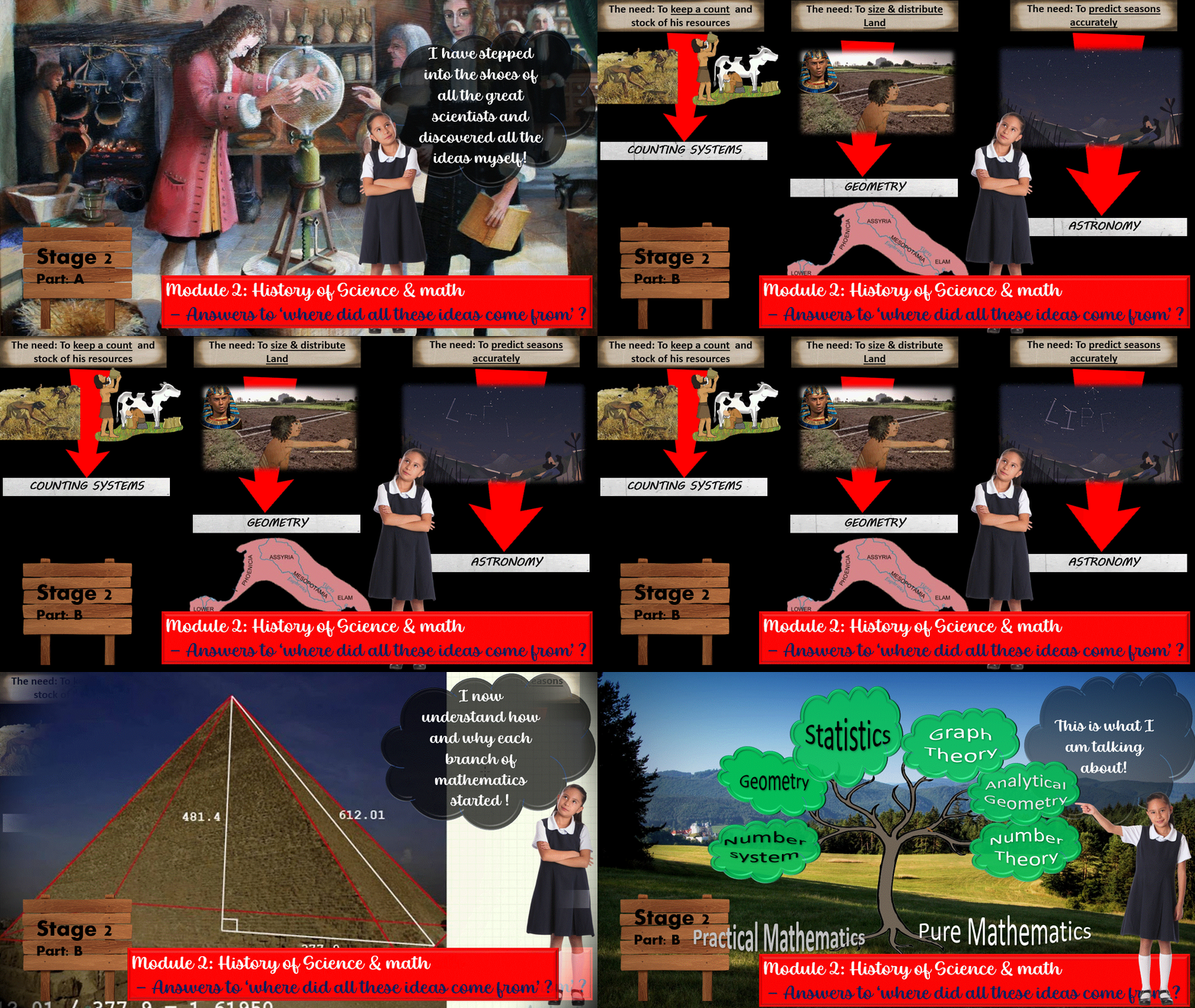
Introduction: This module aims to answer the most vexing question students have ? When faced with definitions, formulas, abstract ideas students across the ages have wondered: where all these ideas came from ? who thought about it first and what led them to ask these questions ? how did they go about finding the answers ? In this module students will play the protagonists (by stepping into the shoes of those great scientists) and will be challenged with the same questions and circumstances. They will play the role of Galileo and Newton repeat the same experiments that they did and come up with the answers themselves
Part 1: The history of Science and Engineering from the advent of agriculture and pottery, through Egyptian, Greek and Roman eras, to the age of discovery and sail, Industrial revolution until the present era of Artificial Intelligence.
Part 2: The history of Math from the pioneers who used it for counting & measuring to all the present day disciplines of discrete mathematics, analytical geometry, statistics, graph theory etc.
Module 3: Problem-solving Approach and Math Toolbox
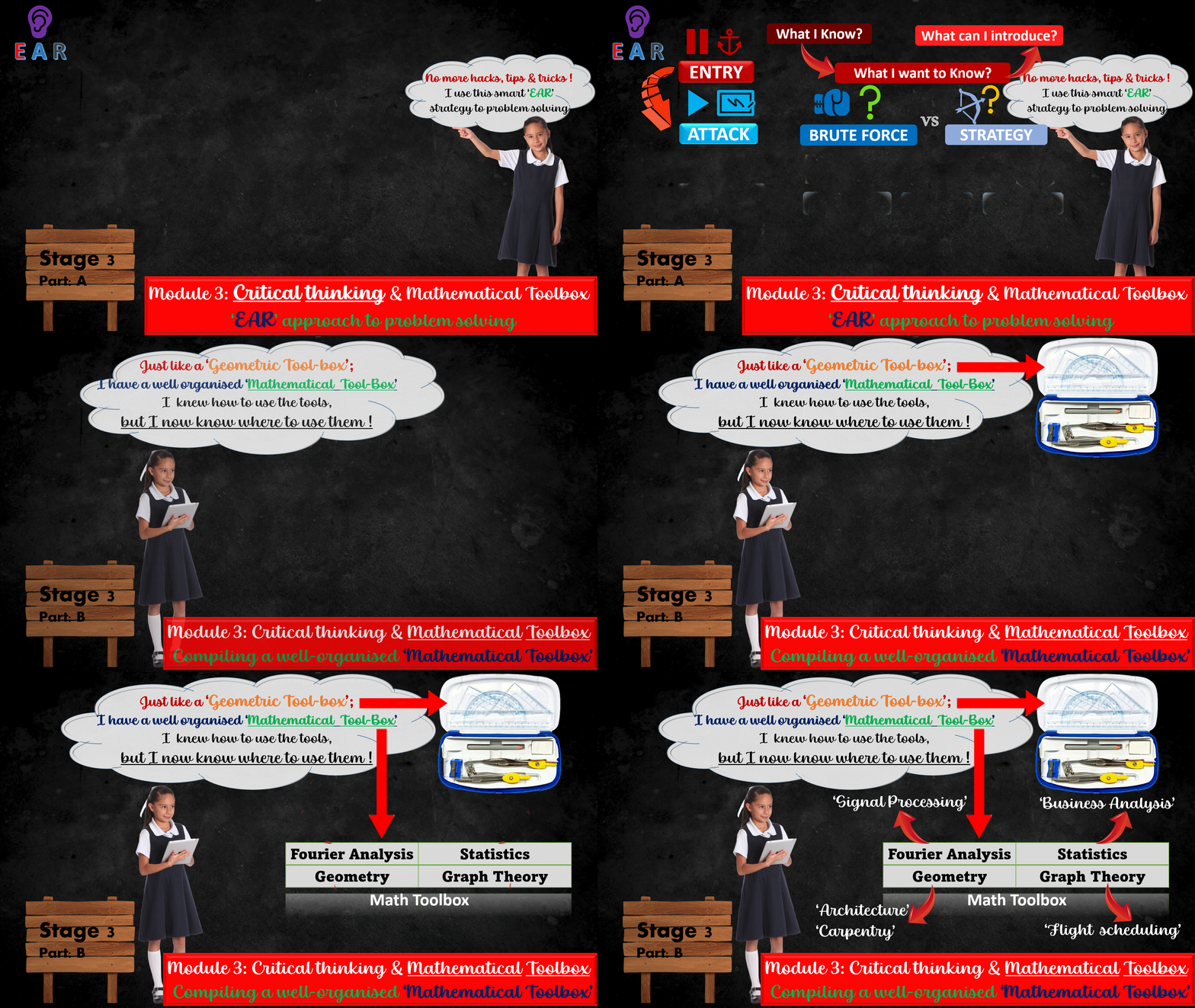
Introduction: 1st aim of this module is to develop an overall approach to problem solving by deploying the 'E A R' strategy developed by George Polya.
2nd Aim, is to develop an organised 'Math Toolbox'. Students are traditionally familiar with how to use the tools because they are raised in a system of 'Practice makes Perfect' and solve many problems of the same kind which just a few change in values of variables. But many a times they don't know where to use these tools and how to choose multiple tools in solving a given problem. This module will address these issues making mathematics a strong problem solving weapon.
Part 1: The 'EAR' strategy will be employed to 20 different real-world mathematical scenarios and 4 scenarios that are connected to physics. This section will help students sharpen their problem solving skills and will be unfazed in the face of novel problems, for which they will have to find solutions.
Part 2: Goes alongside part 1 and as students go through various problems and employ different tools, they will learn how different tools compliment each other in bringing out different facets of the problem. They will learn how some tools are efficient while others give greater insight.
Module 4: Physics through the engineering lens
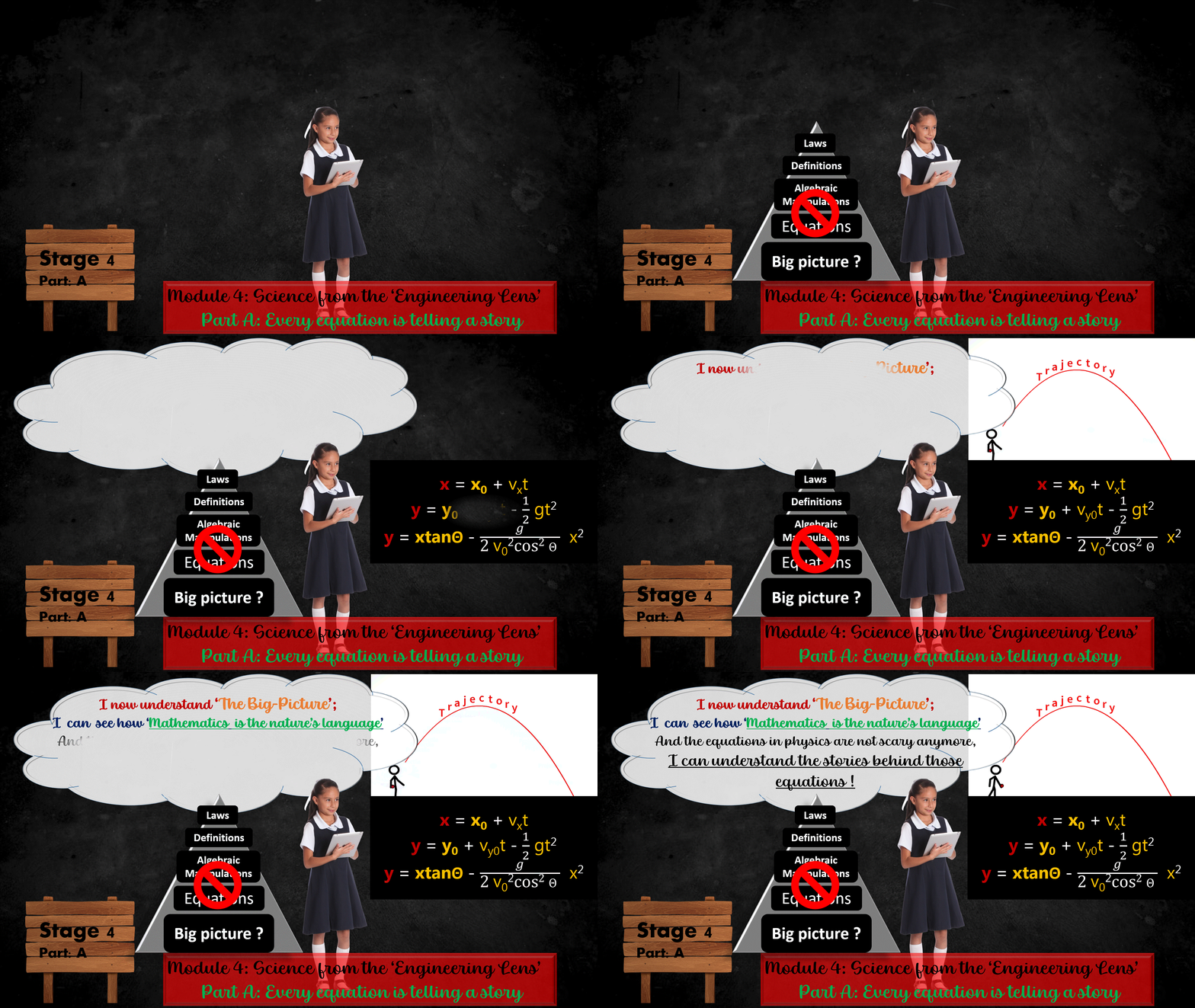
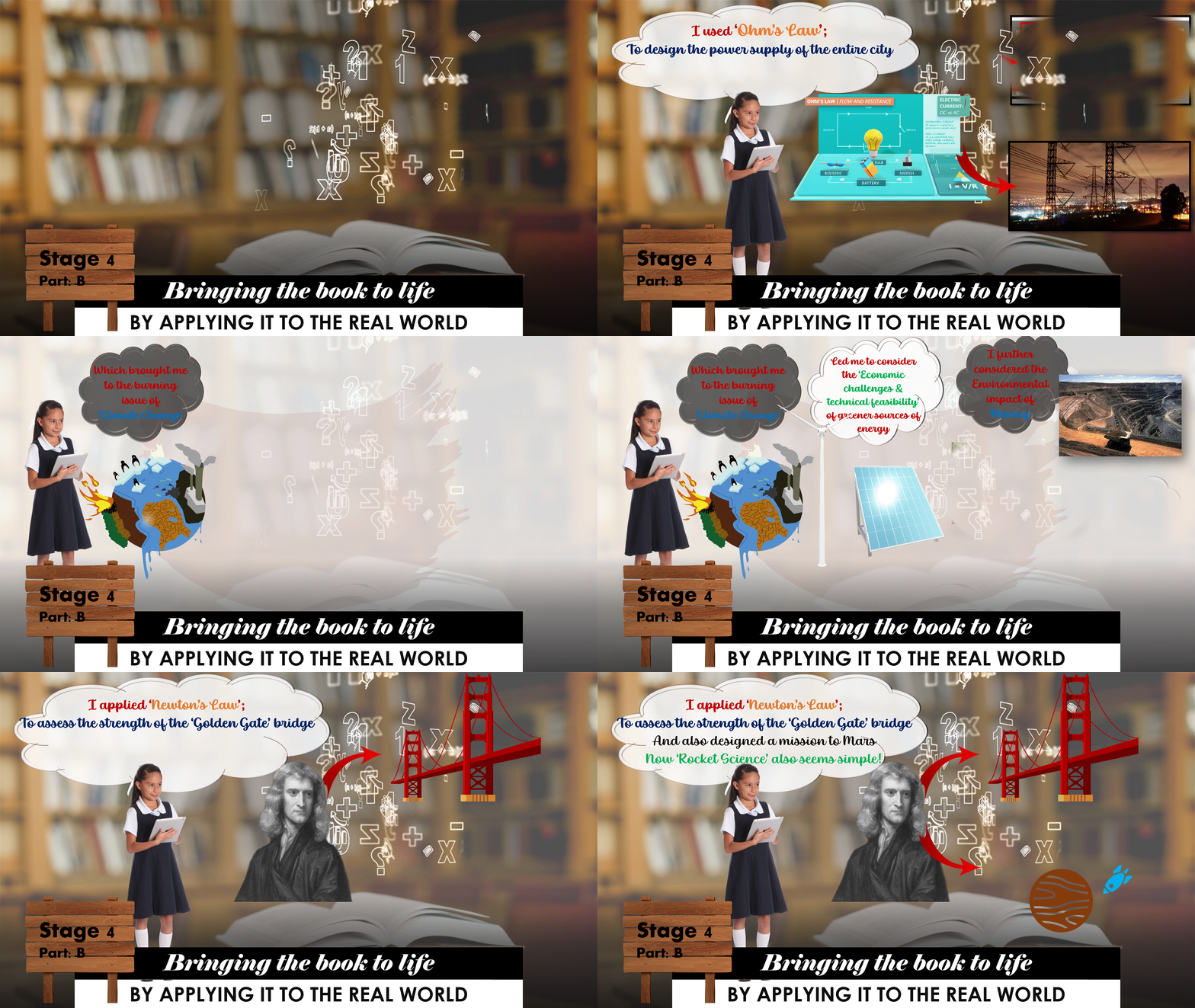
Introduction: 1st aim is to learn the physics independent of the math. 2nd aim is to apply the math and physics to the natural and engineering world. This will answer the most vexing questions that students have: will this ever be useful to me? and will also give students a sneak peek into what a day in the life of various professions feels like enabling them to make smarter career choices.
Part 1: The entire physics syllabus from school to college is covered under 6 sections: 1) Newtonian mechanics 2) Waves and Fluids 3) Thermodynamics 4) Electricity and Magnetism 5) Optics 6) Modern Physics
Focus will be on developing a strong foundational understanding of physics independent of the Math. The focus will also be to come to a concrete understanding of the mathematical formulas in physics and unravel the fascinating stories that lie hidden in those equations.
Part 2: To apply textbook physics to real-world applications. The projects will also include an assessment of the technical feasibility and economic viability of the options. This much needed economic considerations is missing from traditional education.
Some of the 'Engineering projects' in the program:
1) Designing a space mission to Moon/Mars (will be done using a software)
2) Docking a space shuttle on the International Space Station
3) Designing the power supply of a city (From power plant to grid to fan) using traditional thermal power plants
4) Designing the power supply of a small township using greener alternatives (wind and solar power)
5) Designing the mobile telecommunication network (starting from days of 1G in the 1970s to today's 5G network)
6) Understanding the entire Information technology (IT) infrastructure of the 21st century (will include: cloud computing, Internet of Things, Artificial intelligence and Machine learning principles)
7) Understanding the 3 main part of any machine (structural components, movement components and control components)
8) Designing a modern day 4 wheeler from scratch that runs on fossil fuel using the principles in the above project
9) Changes in electrical vehicles and consideration of various sources for the electricity (key idea: the electric vehicle cannot be cleaner/greener than the source of electricity).
10) General assessment of all structures (buildings, bridges and towers) and identifying the 6 structural elements from which all structures are built
11) Technical assessment of the 'Golden-gate' bridge by building it from scratch using concepts learned in project 10
12) Designing a load bearing structure (building) and making it stronger by mere change in design.
13) Technical and economic considerations of drilling an oil-well (for crude-oil extraction)
14) Building an Eco-friendly home using the principles learned in 'Thermodynamics' section
15) Enterpreunership Project: Setting up of an induction motor manufacturing unit
16) Enterpreunership Project: Setting up a chemcial manufacturing unit
The 4 Stages explained through images
 |  |  |  |
|---|---|---|---|
 |  |  |  |